

Rhinoplasty in Kochi: Consulting Dr. Mathew P C at Newface, Chengannur
Considering rhinoplasty from Kochi? Know the types of nose surgery, consultation, recovery and risks with Dr. Mathew P C at Newface, Chengannur.
Rhinoplasty is surgery to change the shape or size of the nose, to improve breathing, or both. Patients from Kochi who are considering rhinoplasty can consult Dr. Mathew P C, an Oral and Maxillofacial Surgeon, at Newface, Chengannur, Kerala. This guide explains the types of nose surgery, what happens at a consultation, how the procedure is done, recovery, risks and the factors that affect cost.
Also read: Rhinoplasty Surgeon in Kerala, Cosmetic Rhinoplasty in India, Dorsal Hump Reduction and Tip Plasty, Revision Rhinoplasty
Where Is the Rhinoplasty Consultation for Kochi Patients?
Newface is located at Hatchery Junction, Chengannur, Kerala 689122. Patients from Kochi and other districts can book a consultation there through the Contact Us page. Travel and stay plans for surgery and follow-up visits can be discussed at the consultation.
Who Is Dr. Mathew P C?
Dr. Mathew P C is an Oral and Maxillofacial Surgeon at Newface. His work includes cleft lip and palate surgery, jaw surgery and rhinoplasty. Read more on the About Us page.
- Qualifications: [QUALIFICATIONS]
- Registration status: [REGISTERED]
- Registration no.: [STATE MEDICAL COUNCIL / NATIONAL MEDICAL REGISTER NUMBER]
What Is Rhinoplasty?
Rhinoplasty, commonly called nose surgery, is a surgical procedure to change the shape, size or function of the nose. It can address:
- Cosmetic concerns: reshaping the nose so that it suits the other facial features.
- Functional issues: correcting structural problems that affect breathing, such as a deviated septum.
Many people have both concerns, and the two are often planned together after the nose is examined.
What Are the Types of Rhinoplasty?
-
Closed (endonasal) rhinoplasty: incisions are made inside the nostrils, and the nose is reshaped through them.
- Open rhinoplasty: an extra small incision across the tissue between the nostrils gives a wider view of the nasal structures, and is often used for more extensive reshaping.
- Revision rhinoplasty: corrects problems after a previous nose surgery. Read more about revision rhinoplasty.
- Post-traumatic rhinoplasty: repairs a nose damaged by injury. Read more about post-traumatic rhinoplasty.
- Non-surgical rhinoplasty: dermal fillers are injected to change the contour of the nose for a limited time. It is not suitable for everyone, it does not make the nose smaller, and it carries risks, including, rarely, a serious complication if filler blocks a blood vessel. Read more about non-surgical rhinoplasty.
The choice of technique depends on your nasal structure, your goals and the surgeon’s assessment.
Who May Consider Rhinoplasty?
Adults in good general health with realistic expectations may consider it, for example if they have:
- A nasal hump, a wide bridge or a wide or bulbous tip
- A crooked or drooping tip
- Breathing difficulty from a structural problem such as a deviated septum
- Changes in the nose after an injury
A consultation is needed to confirm whether surgery suits you. In younger people, cosmetic surgery is usually deferred until nasal growth is complete. See also: Wide Nose Correction.
What Happens at a Rhinoplasty Consultation?
- The surgeon asks about your concerns, goals, medical history, medicines and allergies.
- Your nose and breathing are examined, and photographs may be taken for planning.
- The options, alternatives, risks and limits of surgery are explained.
- Cost factors and follow-up are discussed.
How Is Rhinoplasty Done?
-
Anaesthesia: general anaesthesia, or local anaesthesia with sedation.
- Incision: inside the nostrils (closed) or across the columella and inside the nostrils (open).
- Reshaping: bone and cartilage are reshaped, reduced, repositioned or supported with grafts.
- Closure and support: the incisions are closed, and a splint is usually placed over the nose.
What Is Recovery Like After Rhinoplasty?
-
Splint: usually removed after about a week.
- Swelling and bruising: common. Bruising usually settles in one to two weeks, while swelling, especially at the tip, can take months to settle.
- Work and activity: many people return to light routine activities in about one to two weeks, and avoid strenuous activity for the period the surgeon advises.
- Final result: the nose keeps settling, and the final shape can take up to a year or more to become clear.
Healing tips: sleep with your head raised, avoid blowing your nose for the first few weeks as advised, follow your surgeon’s advice on medicines and aftercare, protect your nose from the sun and from knocks, and attend all follow-up visits. Contact your surgeon if you have heavy bleeding, fever, or increasing pain or swelling. Read more about pain after rhinoplasty.
What Are the Risks of Rhinoplasty?
As with any surgery, risks include bleeding, infection, scarring, numbness, breathing difficulty, asymmetry, a result that does not match your expectations, and the need for revision surgery. Your surgeon should explain these risks before surgery. Results are not guaranteed and vary from person to person.
How Do I Choose a Rhinoplasty Surgeon?
- Registration: check the surgeon’s registration number and qualifications on the National Medical Register or the State Medical Council.
- Training: ask about training and experience in the type of rhinoplasty you need.
- A clear plan: the surgeon should examine you, explain the options and alternatives, and tell you the risks, recovery and follow-up.
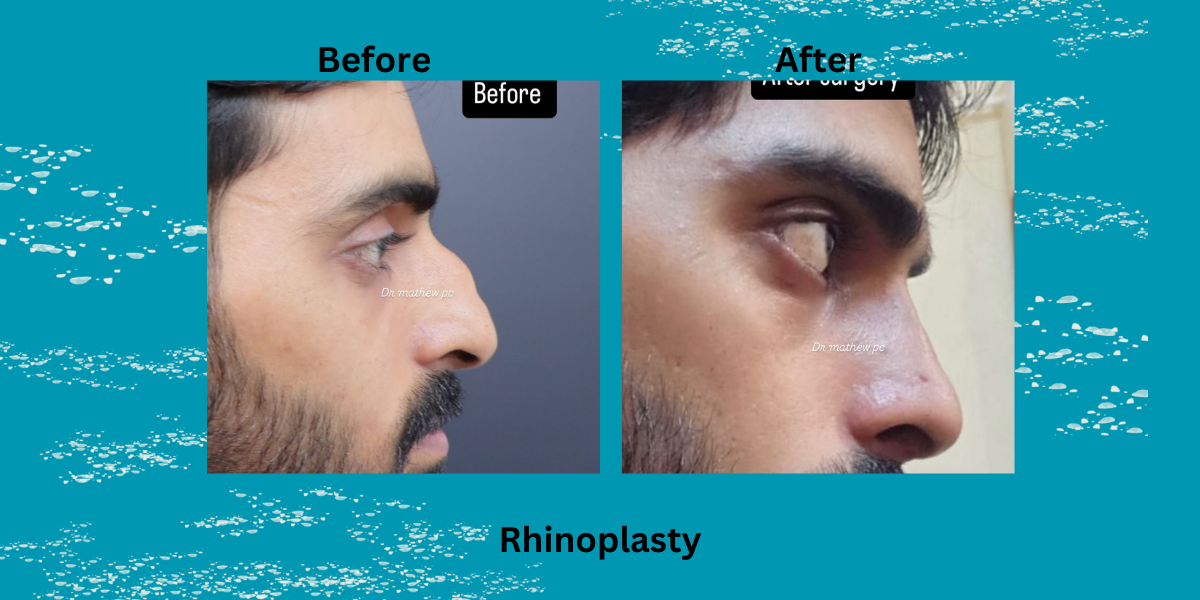
- Be careful with guarantees and rankings: no surgeon can guarantee a result. Testimonials and before-and-after photographs may not reflect your outcome, so do not decide on them alone. Consider a second opinion.
What Affects the Cost of Rhinoplasty?
The cost depends on the extent of the surgery, whether grafts are needed, the technique used, the surgeon’s fees, the hospital, anaesthesia and follow-up. A cost estimate can be given only after you are examined.
Frequently Asked Questions
Where can I consult Dr. Mathew P C for rhinoplasty if I live in Kochi?
Consultations are held at Newface, Hatchery Junction, Chengannur, Kerala. You can book through the Contact Us page.
What is rhinoplasty?
It is a surgical procedure to change the shape, size or function of the nose.
Can rhinoplasty help breathing problems?
Functional rhinoplasty can correct structural problems, such as a deviated septum, that affect breathing. Suitability is decided after examination.
How long is recovery after rhinoplasty?
The splint comes off after about a week, many people resume light routine activities in one to two weeks, and swelling can take months to settle. The final shape can take a year or more.
Is rhinoplasty painful?
Surgery is done under anaesthesia. Afterwards there is usually mild to moderate discomfort, swelling and congestion, managed with prescribed medicines.
What does rhinoplasty cost?
The cost depends on the technique, how complex the case is and hospital charges. It can be estimated after a consultation.
Are the results permanent?
Results are long-lasting, but natural ageing can bring small changes over time.
More questions are answered on the FAQ page. See all procedures offered at Newface.
Information provided by: Dr. Mathew P C, [QUALIFICATIONS], Oral and Maxillofacial Surgeon. Registration status: [REGISTERED]. [STATE MEDICAL COUNCIL / NATIONAL MEDICAL REGISTER] registration no.: [NUMBER].
This page provides general health information for education only. It is not a substitute for medical advice and does not promise or guarantee any result. Outcomes vary from person to person.
Newface, 8J4F+X7X, Hatchery Junction, Chengannur, Kerala 689122. Phone: +91 8330077198